Links contained in this post and elsewhere on my website may include affiliate links. When you make a purchase through these links, I earn a commission at no additional cost to you. I only link to products and services that I love - and that I think you will love, too!
It doesn’t take long for a new home herbalist to gather an impressive collection of dried herbs, extracts, herbal supplies, and information. Feeling overwhelmed about how to organize your herbal supplies and notes? Don’t worry – we’ve all been there!
I began my first official herbal studies with an herb school in 2006, and I remember what it was like to juggle all of my new tools, herbal supplies, and studying. I realized that my organization needs fell under two categories: herbal supplies and herbal record keeping. After that, everything started falling into place.
Organization is a very personal thing, and some of the best systems evolve over time – so don’t worry if it takes a little while to find a system that works for you. Here are the systems I use, plus more ideas for inspiration.
Tips to organize herbal supplies at home
One of the best things while studying herbalism, for me at least, is having lots of materials around to work with. Making herbal preparations like syrups, salves, extracts, and tea blends really helps me retain what I’m learning. Plus, it’s much easier for me to remember what herbs go into a traditional formula if I have made that formula at least once. However, the downside is that herbal supplies can take up a lot of space and become disorganized very quickly. The first step is to round everything up in one place!
A designated location
Choose a specific location for your herbs. This is one of the simplest organizing hacks, but it really makes a difference. I bought a freestanding cabinet for my herbs and tools, and set it up near my bookshelves. A kitchen cabinet can also work well if you have the space for it. My kitchen is tiny, so my herbal cabinet lives in my office nook. Wherever you make space, don’t use a bathroom cabinet. Most jars and bags aren’t truly airtight, and the humidity in a bathroom will ruin your herbs.
Basements also often have high humidity. If your office or living space is on the basement level of a house, make sure to keep your herbs in sealed containers and try running a dehumidifier by your supply cabinet. Extremes of temperature are bad for your herbs, too, although heat is the worst culprit in that regard.
How to organize your herbal supplies and tools
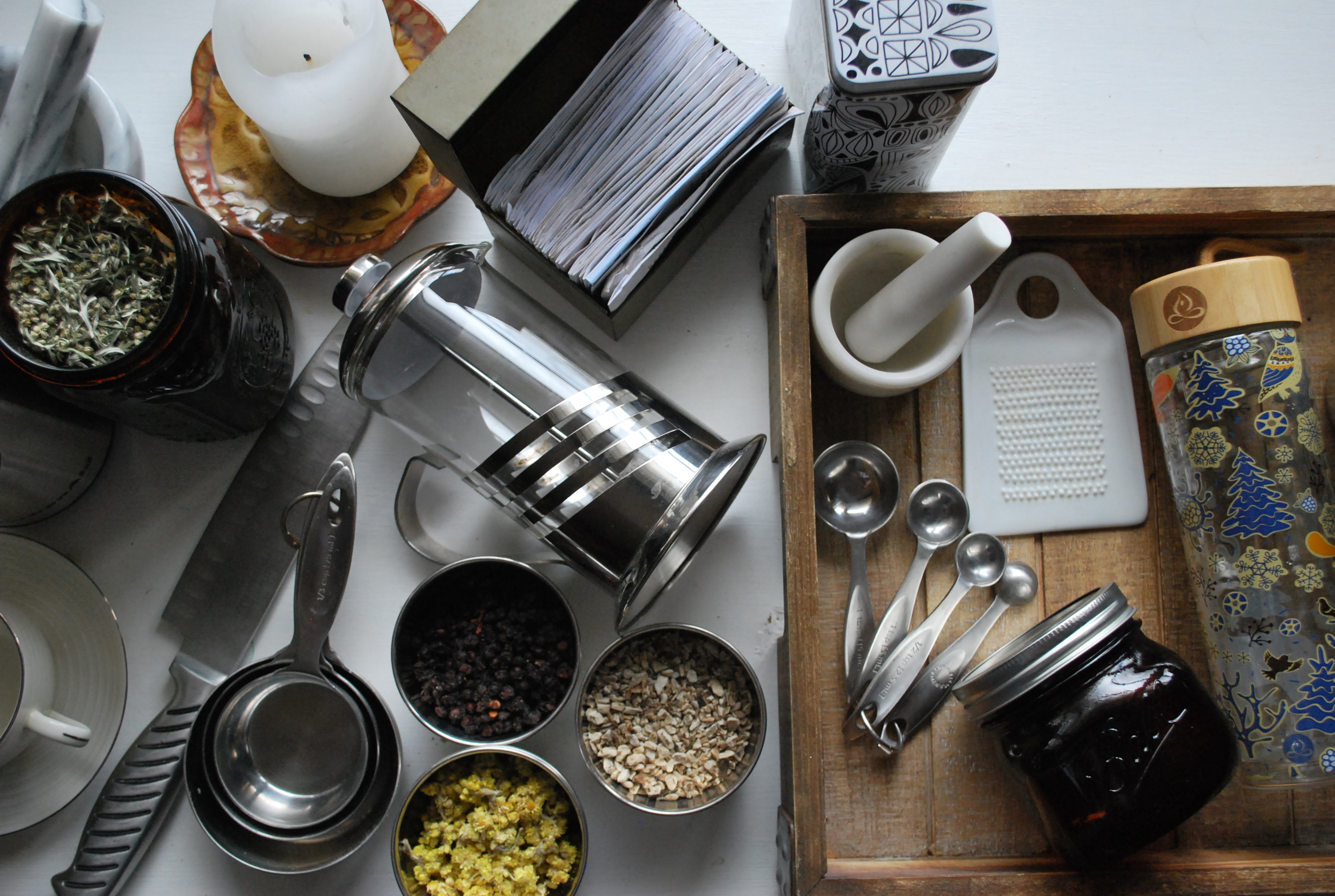
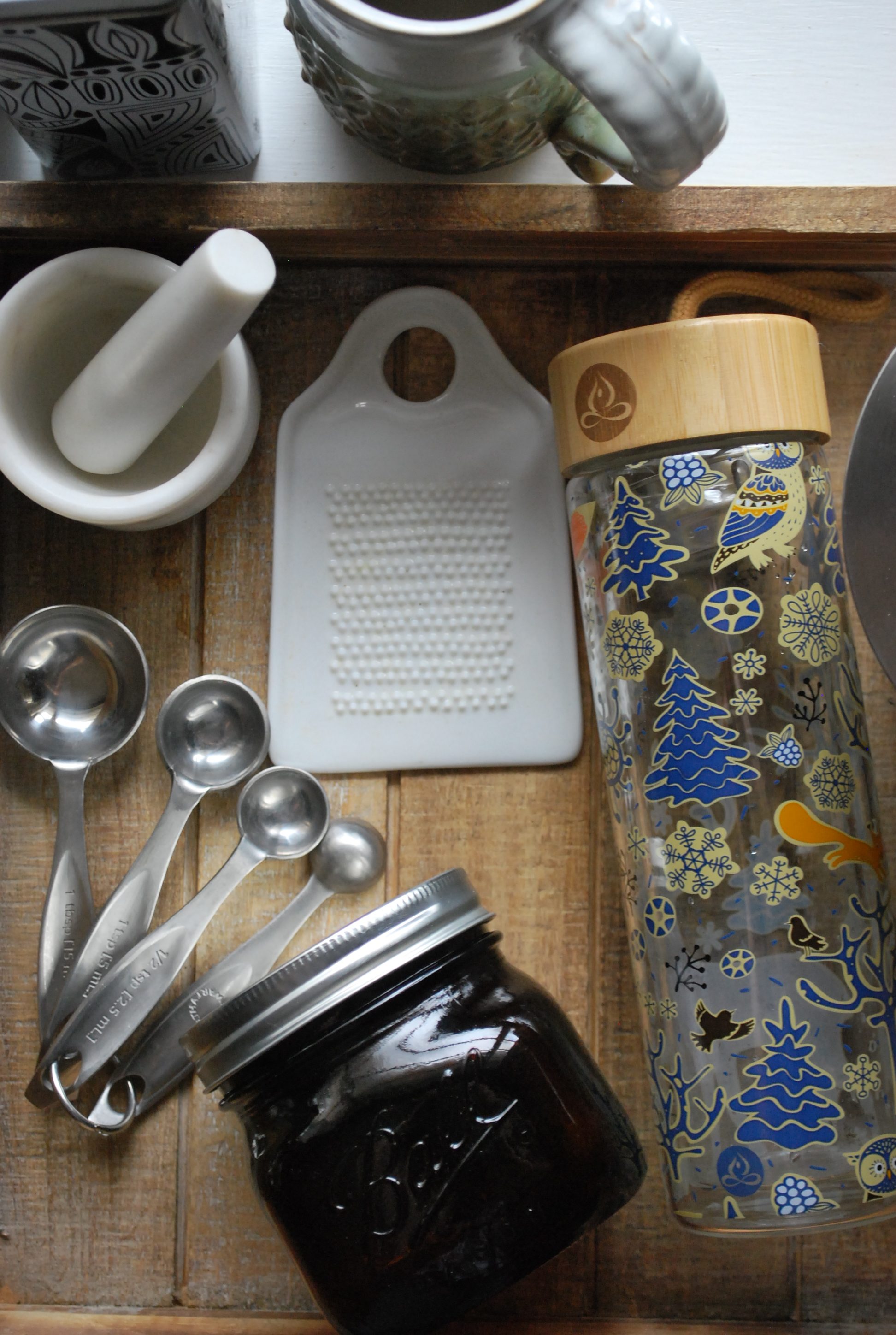
Grouping similar items together also helps, as does making sure everything has an assigned spot. For instance, I prefer to keep extracts on the top two shelves in my cabinet. My mortar and pestle, my cutting board and knives, and beeswax also stay on those shelves.
Enameled pots (dedicated for herbal concoctions) go on the top of the cabinet. Then I keep bar cloths, mesh strainers, a coffee grinder, and an apron handy in a basket beside the cabinet. Dried herbs go on the remaining shelves in wide-mouth, screw-top containers (easier to handle than lots of bags).
Your storage space will shape the best way to organize your herbal supplies, and you’ll find what works the best for you by experimenting. It may simply be a matter of preference! I tried keeping my herbs in alphabetical order for a while but soon realized that organizing by leaves/barks and roots/flowers works better for me.
Labels for herbal supplies
Labels are important for several reasons. Knowing what something is and how old it is are both extra important for home herbalists! You’ll need labels for dried herbs, finished extracts, and projects-in-process.
Labeling options for dried herbs include computer printed (my favorite, they look fabulous), taped-on labels from the bags the herbs came in (second favorite), and hand-labeled. I like to keep track of the date purchased, company, and lot number (or location and date of harvest if I grew it myself). When it comes to dried herbs, labeling with both the common name and the botanical name is a good way to learn the botanical name by association.
I typically label homemade extracts and blends with a press date, common names, and whether the extract used dried or fresh plant material. This is fine for personal use.
Other ideas for organizing herbal supplies
Of course, a cabinet isn’t the only way to organize your herbal supplies. You might find that one of these ideas works with your space or aesthetic.
- baskets or boxes on a shelf
- an antique chest
- under-the-bed storage boxes
- a bench with built in storage
- repurposed book case
- a sideboard
- lockers
If you prefer to work with extracts and don’t keep many dried herbs on hand, a small kit is perfect. Thrift stores can turn up vintage luggage that’s sturdy and perfect for an herbal kit. This article shows how I cleaned up an old train case to make a first aid kit. I use one to keep extracts and another to keep tools.
Other ideas for smaller, portable kits include:
- tool boxes
- picnic baskets
- hard shell backpack
- metal lunchboxes
- tackle boxes
Record keeping
Once you have a handle on storing your supplies, keeping track of everything is the next step. Personally, I like having a planner specifically for my herbal studies. It helps me track everything from when I start maceration extracts to when I placed orders (and how much I spent). I also note down release dates for new courses and books I’m excited about, or upcoming herbal events. In addition, you might find inventories helpful.
Tracking your herbal studies
Using a three ring binder, journal, or planner to track your herbal studies is just as helpful as organizing your herbal supplies. If you keep a calendar or planner, consider jotting down things like:
- when you start a new course
- webinars or classes you attended
- when you listened to a podcast episode and what it was about
- starting and finishing an herbal book
If you keep a journal or three ring binder, you might find it helpful to make space for:
- reading lists
- notes from classes, podcasts, or webinars
- monographs
Keeping inventory
Tracking what you have is as important as where it is. My most important inventories are for bulk herbs, extracts, and books.
I’ve found it’s really helpful to keep these inventories in a digital format accessible on my phone. Although I miss having handwritten lists for nostalgia’s sake, it’s so helpful having these lists where I can access them from anywhere and easily update them.
Another inventory worth considering is an herbal seed inventory. If you garden, this list makes spring planning a snap!
Enjoy your (freshly organized) herbal supplies!
Thanks for stopping by to read my blog! I hope you found some fresh inspiration for organizing your herbal supplies and giving your herbal record keeping an update. I feel like I make adjustments every time I move addresses, and sometimes just get an itch for a good spring clean and reset.I know it’s an ongoing process for me, and I love sharing what works. Make the process your own and you may be surprised by what you come up with!
This post was originally published on October 16, 2011. Updated December 30, 2021 and May 31, 2026.